Pipe Bursting vs Pipe Lining: Which Trenchless Method Fits Your Line?
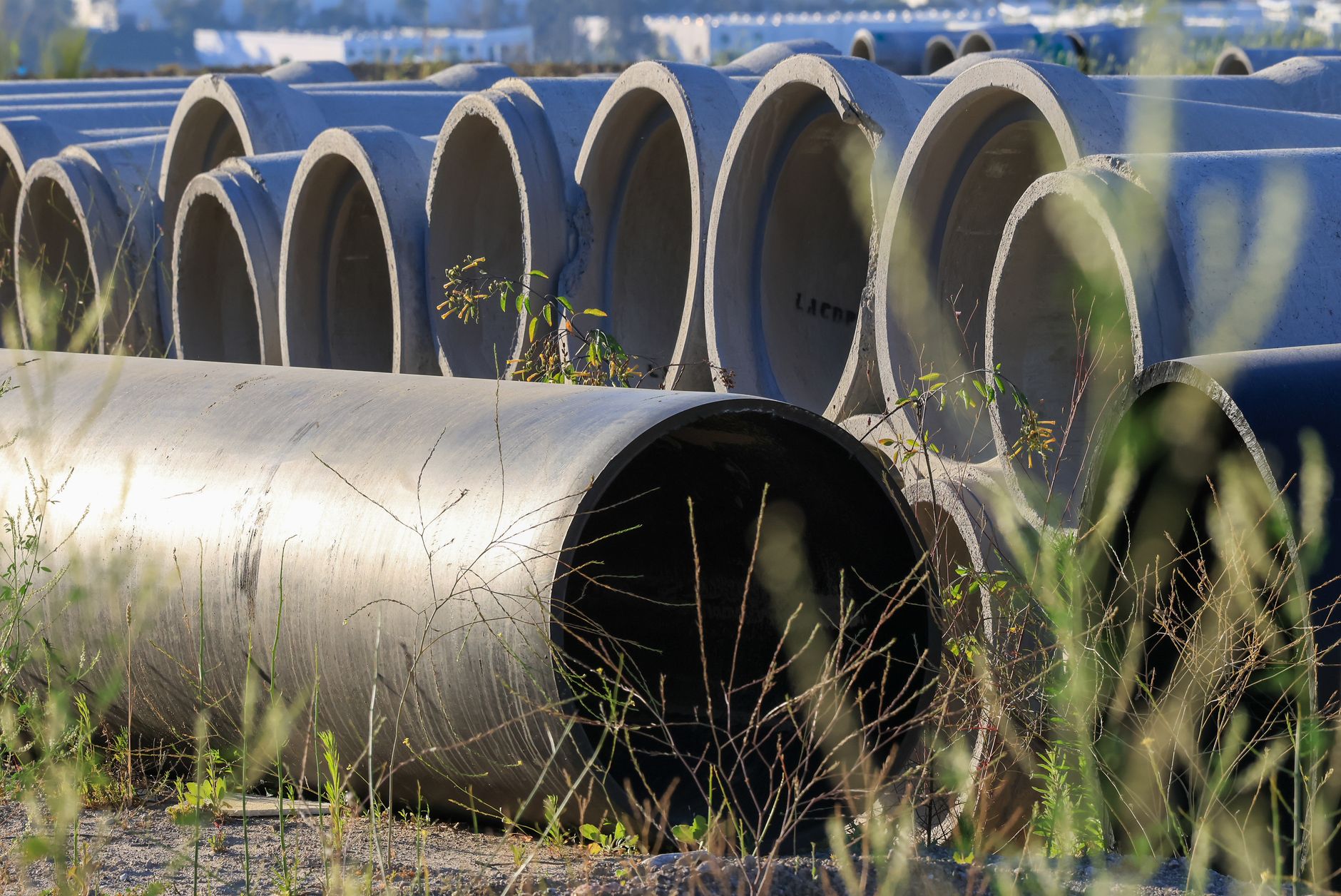
Pipe bursting replaces the old sewer pipe with a brand-new HDPE pipe of equal or larger diameter; pipe lining leaves the old pipe in place and cures a resin liner against its inside wall. If your line is structurally collapsed, offset, or undersized, pipe bursting is the right call. If the pipe is still round and mostly intact but cracked or root-infested, pipe lining costs less and gets you another 50 years. Everything below is how we decide between the two on real jobs across the United States.
Trenchless sewer line repair is any method that fixes or replaces a buried pipe without digging a continuous open trench across your yard, driveway, or street. That's the category both methods live in, and it's why a job that used to mean three days of excavation and a dead lawn now finishes in a single day. We run Trenchless Sewer Repair across the United States every week, and the pipe bursting vs pipe lining question comes up on almost every estimate.
Pipe Bursting vs Pipe Lining: The Short Answer
The deciding factor is pipe condition, not price. A camera inspection tells us whether the existing pipe can still act as a host for a liner or whether it has to be destroyed and replaced.
Here's the honest breakdown:
- Pipe bursting - pulls a bursting head through the old pipe, shatters it outward into the soil, and drags new HDPE in behind it. New pipe, new 50-year service life, same or larger inside diameter.
- Pipe lining - a felt or fiberglass tube saturated with epoxy resin is inverted into the cleaned pipe and cured in place with heat or UV light. The old pipe stays, the liner becomes the new flow surface.
If a contractor quotes you one method before running a camera, get a second opinion. The two jobs are not interchangeable, and the wrong one fails within a few years.
How Pipe Bursting Works
Pipe bursting is a full replacement performed through two small access pits - one at the house, one at the city main or a downstream manhole.
We dig a launch pit roughly 4 feet by 6 feet at the upstream end and a receiving pit at the downstream end. A hydraulic or pneumatic bursting head is winched through the old line. The head is wider than the old pipe, so it fractures the cast iron, clay, or concrete outward into the surrounding soil while a string of fused HDPE pipe is pulled in behind it.
What that means for you:
- The new pipe is one continuous piece - no joints for roots to enter.
- We can upsize. A 4-inch clay line can become a 6-inch HDPE line, which matters if you've added a bathroom or an ADU.
- Typical residential run of 60 to 100 feet takes one day. Longer runs or deeper lines can run into a second day.
- Your yard gets two pits instead of a 60-foot trench.
Pipe bursting is the method we reach for on trenchless sewer line replacement when the existing pipe has lost its shape - collapsed sections, heavy offset joints, or a belly that holds standing waste.
How Pipe Lining Works
Pipe lining, also called CIPP (cured-in-place pipe), rebuilds the inside of a pipe that is still structurally sound enough to hold a liner.
First we clean the line. That usually means high-pressure jetting and a chain cutter to strip roots, scale, and grease back to bare pipe. Then a camera confirms the pipe is round, continuous, and free of major offsets. A resin-saturated liner is pulled or inverted into place, inflated against the pipe wall, and cured - steam or hot water for felt liners, UV light for fiberglass. Cure times run 2 to 4 hours for a typical residential lateral.
What you get:
- A seamless liner with a 50-year design life under normal residential use.
- One access point in most cases - often through an existing cleanout.
- No excavation at all on many jobs, which matters if the line runs under a finished driveway, a patio, or mature trees.
- Slight diameter reduction - usually about 1/4 inch on a 4-inch line, which is not a problem for normal household flow.
We use sewer pipe lining most often on 40-to-70-year-old cast iron laterals that are cracked, pitted, or root-infested but still round. If the pipe has collapsed or is more than about 40% blocked by deformation, lining is the wrong tool.
What Does Pipe Bursting vs Pipe Lining Cost in 2026?
Typical 2026 pricing across the United States runs $80 to $250 per linear foot for pipe lining and $100 to $300 per linear foot for pipe bursting, with most residential jobs landing between $6,000 and $25,000 depending on length, depth, and access.
Here's what actually moves the number:
- Length. A 60-foot lateral is the most common residential run. A 120-foot run to a rear-alley main roughly doubles material and labor.
- Depth. Lines shallower than 4 feet are straightforward. Lines 8 to 12 feet deep in frost country require shoring and add cost fast.
- Access. A cleanout in the front yard keeps lining cheap. A line under a stamped concrete driveway or a mature oak pushes pipe bursting higher because of restoration.
- Point repairs. If only one section is bad, a spot liner or a localized trenchless pipe repair can run $1,500 to $4,000 and solve the problem without touching the rest of the line.
- Permits and restoration. Work in the public right-of-way usually needs a permit and a traffic plan. Sod, concrete, or pavers get restored on top of the pipe cost.
Open-trench replacement still runs $50 to $150 per linear foot in many markets, so it looks cheaper on paper. Add $3,000 to $15,000 for driveway, sidewalk, or landscaping restoration and the gap usually closes or flips.
Which Method Fits Your Line? A Decision Guide
The right method comes down to four things: pipe condition, pipe material, diameter needs, and what's sitting on top of the line.
Choose pipe lining if:
- The pipe is still round and continuous on camera.
- Damage is cracks, joint separation under 1/4 inch, root intrusion, or corrosion pitting.
- You don't need more capacity than the current pipe provides.
- The line runs under a finished driveway, patio, pool deck, or mature landscaping you want to keep.
- Budget is the deciding factor and the pipe qualifies.
Choose pipe bursting if:
- The pipe has collapsed, is severely offset, or has a belly holding water.
- It's Orangeburg, bituminous fiber, or deteriorated clay that's crumbling on camera.
- You need to upsize - added a bathroom, an ADU, or a mother-in-law suite.
- The existing pipe is so rough that a liner wouldn't bond or would leave too little diameter.
- You want a new pipe with a fresh 50-year service life and no dependence on the old host pipe.
We confirm the call with a sewer camera inspection before quoting. No camera, no honest recommendation.
Common Mistakes We See Homeowners Make
The most expensive mistake is choosing a method before anyone has looked inside the pipe. Here's what we run into most often.
- Lining a collapsed pipe. The liner cures against a deformed host and fails within 2 to 5 years. We've torn out liners that were installed over a 30% offset.
- Bursting a line that only needed a spot repair. A single root intrusion at one joint doesn't justify replacing 80 feet of pipe. A $2,000 spot fix can buy you a decade.
- Skipping the pre-lining cleaning. Roots and scale left in the pipe telegraph through the liner and create thin spots. Proper jetting and chain cutting is not optional.
- Ignoring the city main connection. The lateral is yours; the main belongs to the municipality. If the problem is at the tap, that's a different scope and a different permit.
- Choosing on price alone. A quote $4,000 below the others usually means no camera, no cleaning, or a liner thickness that won't hold up.
Recurring backups every spring, gurgling toilets when you run the washer, or sewage smell in the basement are all signs the line needs eyes on it - not another round of drain cleaner. If roots are the main problem, sewer line cleaning & root removal buys time, but it doesn't fix a cracked pipe.
When to Call a Professional
Call us when you've had two or more backups in twelve months, when a camera has already shown cracks or offsets, or when you're buying a house with a sewer line older than 40 years.
We handle the full scope: camera inspection, locating, cleaning, and either lining or bursting depending on what the pipe actually needs. We give you a flat price before we start, and we don't sell you a liner if your pipe needs to be replaced. If you're in an older housing stock market - think pre-1960 neighborhoods where cast iron and clay laterals are still common - that camera inspection is the single most useful $250 to $500 you'll spend on the house this year.
Frequently Asked Questions
How long does pipe lining last compared to pipe bursting?
A properly installed CIPP liner carries a 50-year design life; new HDPE from pipe bursting also carries a 50-year design life, and often longer. The real difference is what happens if the host pipe moves. A liner depends on the old pipe staying put. A new HDPE pipe doesn't.
Can you pipe line a sewer that's already collapsed?
No. A collapsed or severely offset pipe can't hold a liner. We see this on 60-plus-year-old clay and Orangeburg lines where the crown has failed. Those jobs need pipe bursting or open replacement, and any contractor who quotes lining without a camera is guessing.
Does pipe bursting work under a concrete driveway?
Yes, in most cases. Pipe bursting only needs a launch pit and a receiving pit, so a driveway can stay intact if the pits land on either side. We confirm depth and soil conditions first. If the line is shallower than 3 feet under a driveway, we sometimes recommend lining instead.
How much does pipe lining cost in 2026?
Expect $80 to $250 per linear foot in 2026, so a typical 60-foot residential lateral runs $5,000 to $15,000 installed. Pipe bursting runs $100 to $300 per linear foot, or $6,000 to $25,000 for most homes. Depth, access, and restoration drive the spread.
Will pipe lining reduce my sewer capacity?
By about 1/4 inch on a standard 4-inch line - roughly 6% of cross-sectional area. That's not noticeable for normal household use. If you've added fixtures or an ADU and the line is already undersized, pipe bursting lets us upsize instead.
Get Help with Trenchless Sewer Repair in the United States
If you're weighing pipe bursting vs pipe lining, the answer is in the camera footage - and we'll show it to you before we quote a number. Call Trenchless Sewer Pros at (866) 335-0208 and we'll get a technician out to inspect the line and give you a straight recommendation.
Frequently asked questions
How long does pipe lining last compared to pipe bursting?
A properly installed CIPP liner carries a 50-year design life; new HDPE from pipe bursting also carries a 50-year design life, and often longer. The real difference is what happens if the host pipe moves. A liner depends on the old pipe staying put. A new HDPE pipe doesn't.
Can you pipe line a sewer that's already collapsed?
No. A collapsed or severely offset pipe can't hold a liner. We see this on 60-plus-year-old clay and Orangeburg lines where the crown has failed. Those jobs need pipe bursting or open replacement, and any contractor who quotes lining without a camera is guessing.
Does pipe bursting work under a concrete driveway?
Yes, in most cases. Pipe bursting only needs a launch pit and a receiving pit, so a driveway can stay intact if the pits land on either side. We confirm depth and soil conditions first. If the line is shallower than 3 feet under a driveway, we sometimes recommend lining instead.
How much does pipe lining cost in 2026?
Expect $80 to $250 per linear foot in 2026, so a typical 60-foot residential lateral runs $5,000 to $15,000 installed. Pipe bursting runs $100 to $300 per linear foot, or $6,000 to $25,000 for most homes. Depth, access, and restoration drive the spread.
Will pipe lining reduce my sewer capacity?
By about 1/4 inch on a standard 4-inch line - roughly 6% of cross-sectional area. That's not noticeable for normal household use. If you've added fixtures or an ADU and the line is already undersized, pipe bursting lets us upsize instead.